
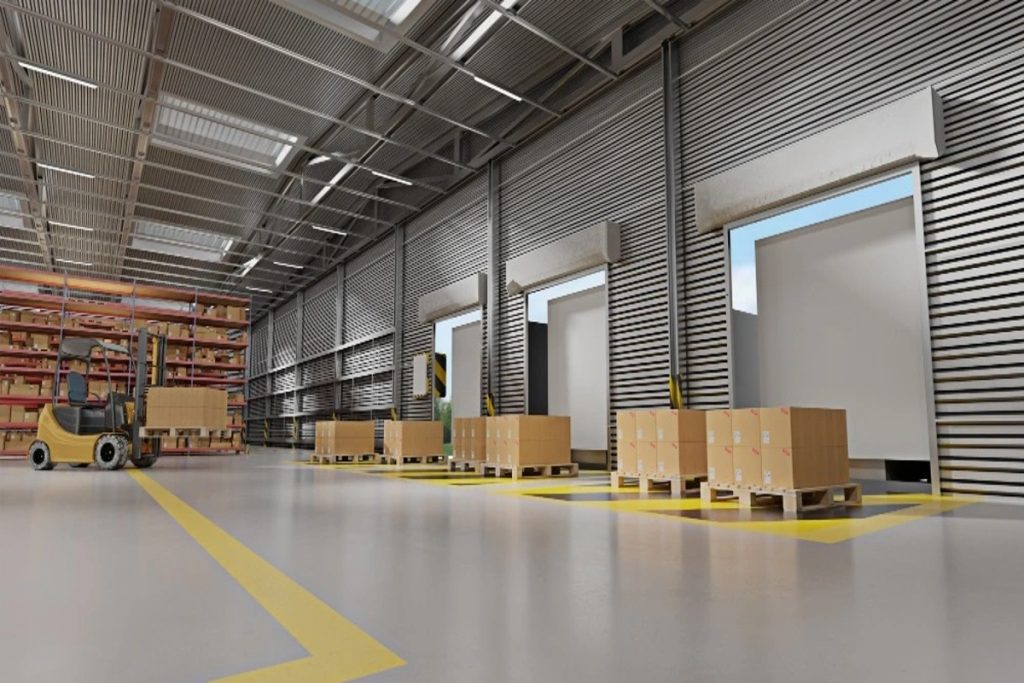
Warehousing in Dubai is no longer just about having space. The conversation has shifted. Storage today is tied directly to how goods move, how quickly they are dispatched, and how well inventory is controlled.
In this environment, warehouse storage Dubai has become part of daily operational planning rather than a separate facility in the background. For companies depending on commercial storage Dubai, this difference affects cost efficiency, delivery timelines, and even risk exposure.
Space Is Tight, So Layout Matters More Than Ever
Industrial areas such as JAFZA and Dubai South are operating with limited Grade A availability. Expanding outward is not always practical, and in many cases, not financially attractive either.
The response has been a structural improvement rather than expansion. Modern warehouse storage Dubai facilities increasingly rely on vertical racking, optimized pallet stacking, and reorganized flow paths to increase usable volume within the same footprint.
For businesses operating under commercial storage Dubai, this shift changes how space is evaluated. It’s no longer about square meters alone. It’s about how efficiently those meters are structured and used.
Storage Is Now Linked to Inventory Behavior
Manual systems still exist, but many warehouses are moving toward real-time inventory monitoring. Warehouse Management Systems are helping track stock movement patterns, identify slow-moving goods, and improve retrieval accuracy.
For companies using warehouse storage Dubai, this improves predictability. Order preparation becomes faster. Stock discrepancies become easier to identify. Delays caused by misplaced inventory become less common.
In practical terms, commercial storage Dubai is evolving from simple storage rental into a controlled logistics environment that supports planning rather than reacting.
Connectivity Is Part of the Advantage
Dubai’s infrastructure continues to influence warehouse strategy. The proximity between Jebel Ali Port, major road corridors, and Al Maktoum International Airport creates a multi-modal network that few cities can match.
Facilities positioned within this network allow warehouse storage in Dubai to function as a transition hub. Goods arriving by sea can be repositioned for air freight or regional distribution within short timeframes.
For businesses relying on commercial storage in Dubai, this reduces idle inventory time and strengthens supply chain coordination.
The value here is not just location — it is timing.
Climate Conditions Cannot Be Ignored
Dubai’s climate introduces risks that are often underestimated. Extended high temperatures and humidity fluctuations can impact product integrity, especially for pharmaceuticals, electronics, cosmetics, and certain industrial materials.
Modern warehouse storage Dubai facilities increasingly incorporate temperature-controlled and multi-zone environments, ranging from -25°C to +15°C depending on storage requirements.
Within commercial storage Dubai, climate control has shifted from being an optional feature to being part of standard risk management.
Sustainability Is Entering Operational Decisions
Cooling large facilities in Dubai requires energy. That reality has pushed many operators to explore efficiency upgrades. Solar integration, sensor-based lighting, and High-Volume Low-Speed airflow systems are becoming more common in newer facilities.
While sustainability was once discussed mainly at a policy level, it is now influencing operational cost structures and compliance expectations. Businesses operating within commercial storage Dubai environments increasingly consider energy efficiency when evaluating long-term partnerships.
In many cases, efficiency improvements also reduce operating costs, creating both environmental and financial benefits.
Storage as a Working Node, Not a Waiting Area
The most important shift is not technological. It is structural. Warehouses in Dubai are no longer endpoints where goods simply wait.
They function as active coordination points. They absorb inbound freight. They support outbound distribution. They balance seasonal demand spikes. They help companies manage unpredictable supply chain shifts.
Through layout optimization, digital monitoring, climate control, and strategic positioning, warehouse storage Dubai now supports modern commercial storage solutions with operational depth rather than passive capacity.
As Dubai continues strengthening its global trade role, storage decisions are increasingly tied to resilience, adaptability, and supply chain stability — not just availability of space.
Conclusion
Warehouse infrastructure in Dubai has evolved into a more structured and connected system. Vertical optimization, digital oversight, environmental controls, and multi-modal access now shape how storage contributes to business performance.
For companies relying on commercial storage in Dubai, the focus is shifting toward integration. Storage must align with freight planning, inventory accuracy, and long-term operational strategy.
Understanding how warehouse infrastructure supports commercial storage solutions allows businesses to manage risk more effectively and operate with greater consistency in a competitive logistics environment